
Design for Cost: The Levers That Set Part Price
The design decisions that drive part cost most, tolerance, geometry, material, finish, and volume, and how to spend cost only where it buys function.
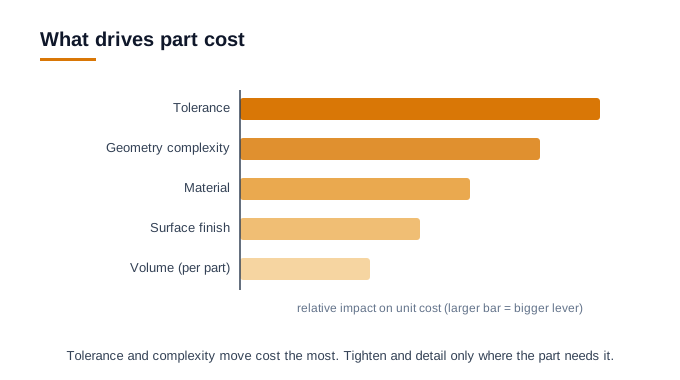
Download PDFMost of a part's cost is set by its design, not by negotiation. Tolerance is the biggest lever: a part toleranced entirely to a precision band can cost several times the same part with a few critical features called out. After that come geometry complexity, material choice, surface finish, and matching the process to your real volume.
Most of a part's cost is set by its design, not by negotiation. By the time a model is finished, the geometry has largely decided how long it takes to make, how much material it uses, how many operations it needs, and how much can be scrapped. This guide covers the design levers that move cost the most, so you can spend cost where it buys function and save it everywhere else. The principles are standard design-for-manufacture (Boothroyd DFMA); the specific numbers for your part come from the quote.
The levers, in order of impact
Tolerance is the biggest lever
Tolerance is the single largest cost driver in most parts. A tight tolerance means slower cutting, extra finishing passes, more inspection, and more scrap, and the cost climbs sharply as the band narrows. A part toleranced entirely to a precision band can cost several times the same part at a general tolerance with a few critical features called out. Reserve tight tolerances for bearing seats, sealing faces, and mating fits, and leave the rest at a general standard.
Geometry complexity
Every feature is an operation. Deep pockets, many setups, tight internal corners, undercuts that force side actions, and features on five faces all add machining time or tooling. Simplifying geometry, consolidating features onto fewer faces, opening internal radii, and removing undercuts reduces the operation count directly.
Material
Material affects cost twice: the stock price and how easily it machines or molds. A free-machining grade cuts faster than a tough or abrasive one, and a common grade costs less than a specialty alloy. Choosing the least expensive material that meets the requirement, in a standard stock size, lowers both.
Surface finish
A finer finish than the part needs adds a finishing operation and inspection. Specify a cosmetic or fine finish only on the faces that require it, and leave functional faces as-made.
Volume and tooling
Volume changes which process is cheapest.
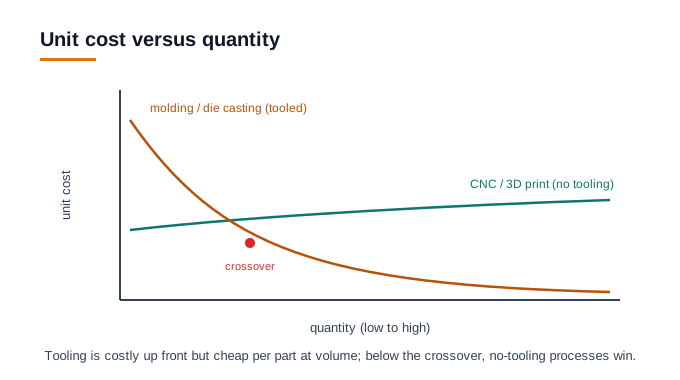
A tooled process (injection molding, die casting) carries a large up-front tool cost but a low per-part cost, so it wins above a crossover volume. A no-tooling process (CNC, 3D printing) has no up-front cost but a flatter per-part curve, so it wins below it. Matching the process to your real volume, not your hoped-for volume, avoids paying for a tool you will not fill or machining thousands of parts one at a time.
Practical ways to design out cost
- Loosen every tolerance that does not have a functional reason.
- Consolidate features onto fewer faces and setups.
- Add radii to internal corners and remove undercuts where you can.
- Pick a standard material and stock size.
- Specify fine finishes only where they show or seal.
- Design assemblies to reduce part count and simplify joining.
- Match the process to the actual production volume.
How MASA FabWorks helps
Our DFM engine surfaces the cost drivers while you can still change them: it flags the tight tolerance, the unreachable pocket, the undercut, and the thin wall before you quote, and explains the design change that removes the cost. Because the review is automated and upfront, you see the expensive choices early, not after the first quote comes back. The result is a part designed to be made efficiently, quoted on how it will actually be produced.
Frequently asked questions
- What drives the cost of a machined part the most?
- Tolerance. A tight tolerance means slower cutting, extra finishing, more inspection, and more scrap, and cost climbs sharply as the band narrows. Reserve tight tolerances for bearing seats, sealing faces, and mating fits, and leave the rest at a general standard.
- How can I reduce the cost of a custom part?
- Loosen every tolerance without a functional reason, consolidate features onto fewer faces and setups, add radii and remove undercuts, choose a standard material and stock size, specify fine finishes only where they show or seal, and match the process to your actual production volume.
- Does a tighter tolerance really cost more?
- Yes, often several times more if applied across a whole part. The tightest tolerance on the drawing sets the price, because it dictates the slowest operation, the most finishing, and the most inspection. Spend it only on the features that need it.
Related guides
Ready to check your own design? Upload your files. We measure your model against per-process, per-material rules and send a DFM review before you commit to a quote.