Vacuum Casting
Production-quality plastic prototypes and low-volume runs from silicone molds.
Vacuum casting bridges the gap between 3D-printed prototypes and injection-molded production parts. A silicone mold is made from a CNC or SLA master model, then polyurethane resins are cast under vacuum to produce parts with properties closely matching production thermoplastics, at a fraction of the tooling cost.
CNC or SLA
Master Model
±0.3 mm / 0.012 in
Dimensional Accuracy
Up to 25
Copies per Mold
50+
Resin Types
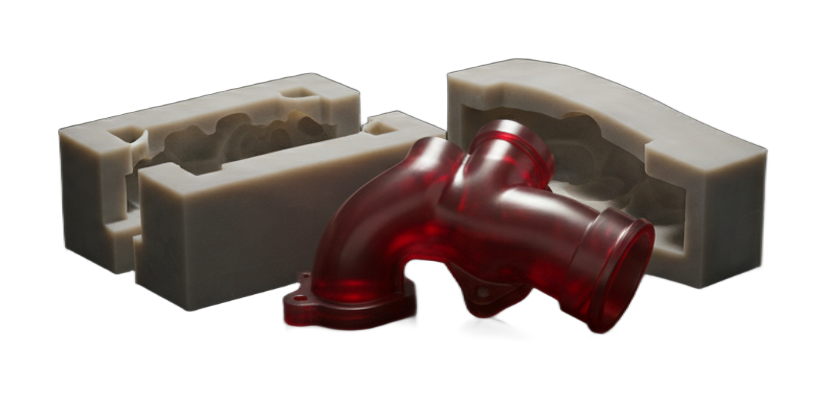
Vacuum Casting Capabilities
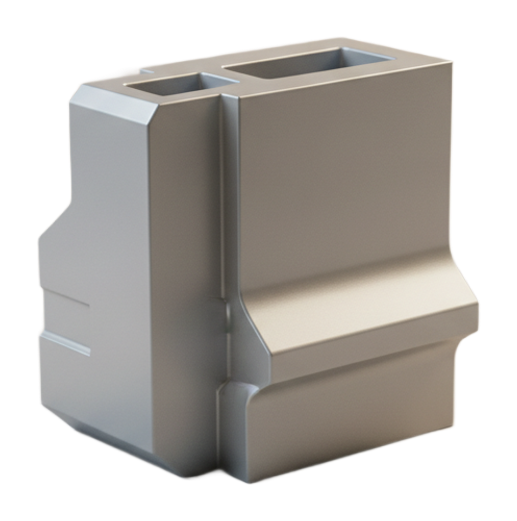
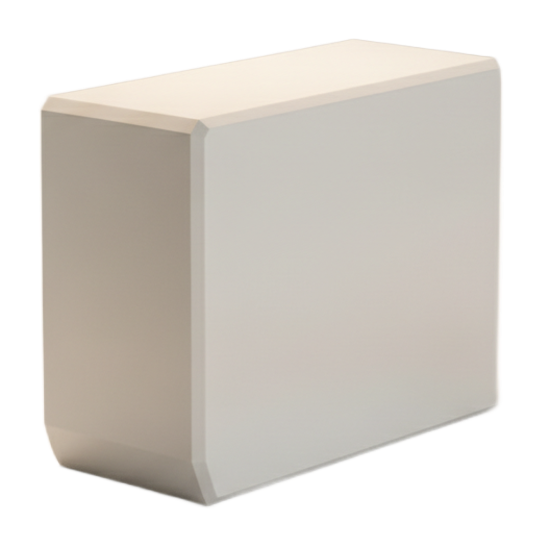
Master Model Preparation
CNC-machined or SLA-printed master models are surface-finished to the desired texture and quality before mold making. The master determines the surface quality of every cast part.
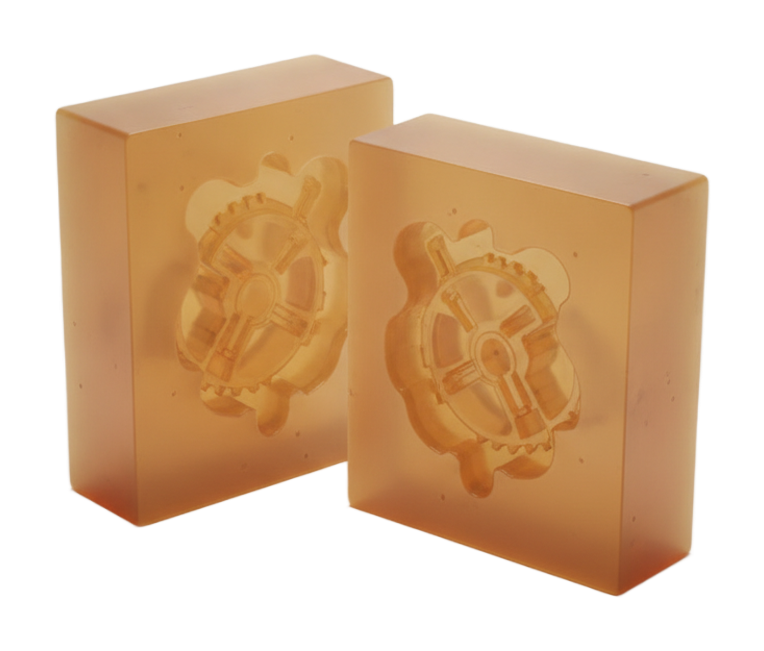
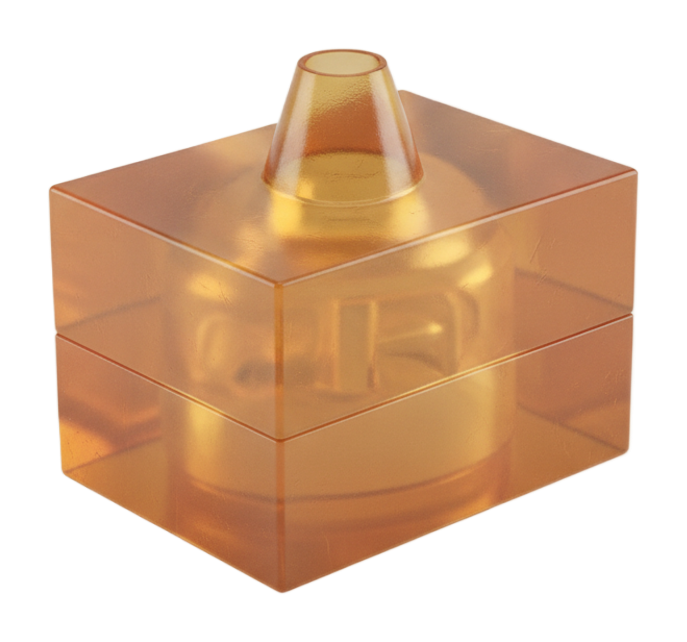
Silicone Mold Making
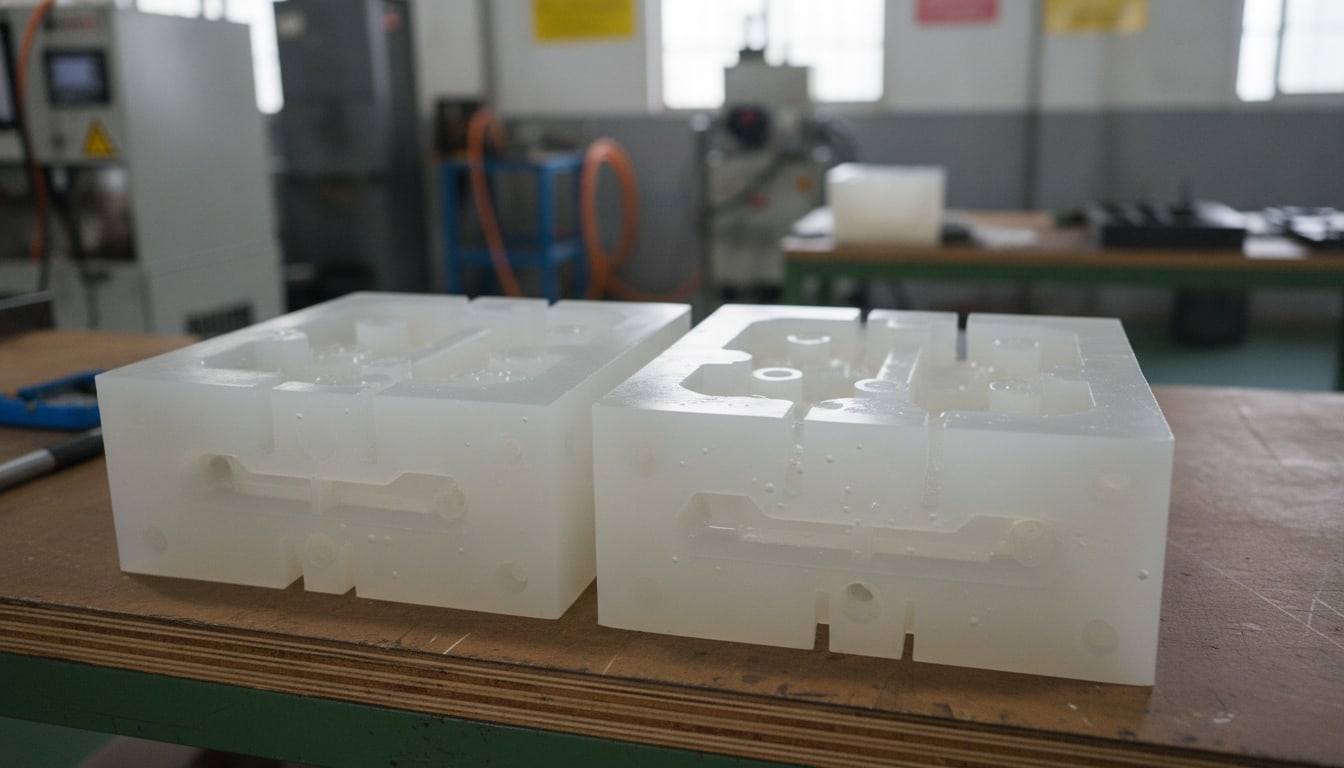
Two-part silicone rubber molds are cast around the master model under vacuum. Complex split lines and side-pulls allow undercuts and detailed geometries without significant tooling cost.
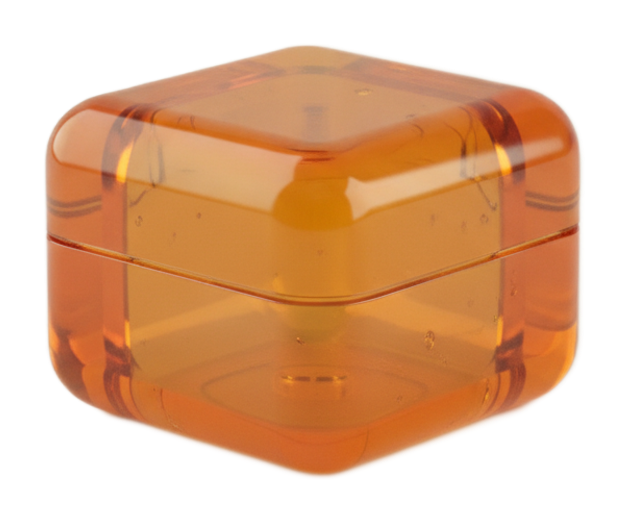
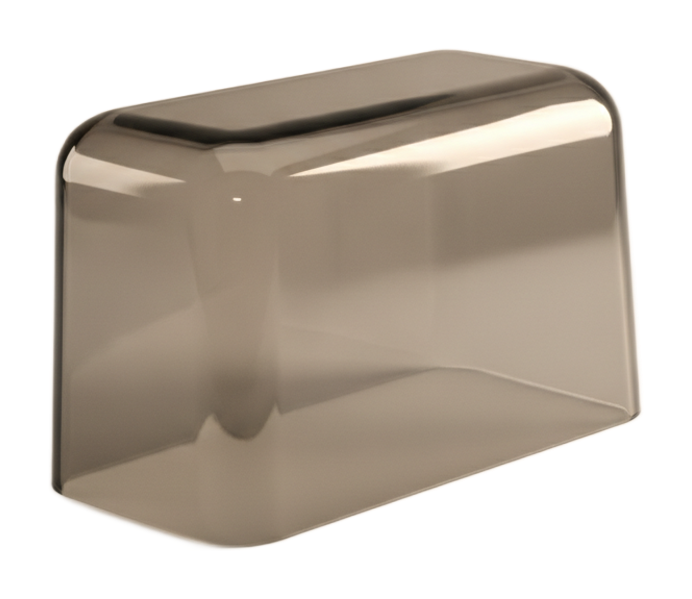
Vacuum Casting
Mixed polyurethane resin is drawn into the mold under vacuum, eliminating air voids and ensuring complete fill of fine details. Each cast cycle produces a part with consistent surface quality.
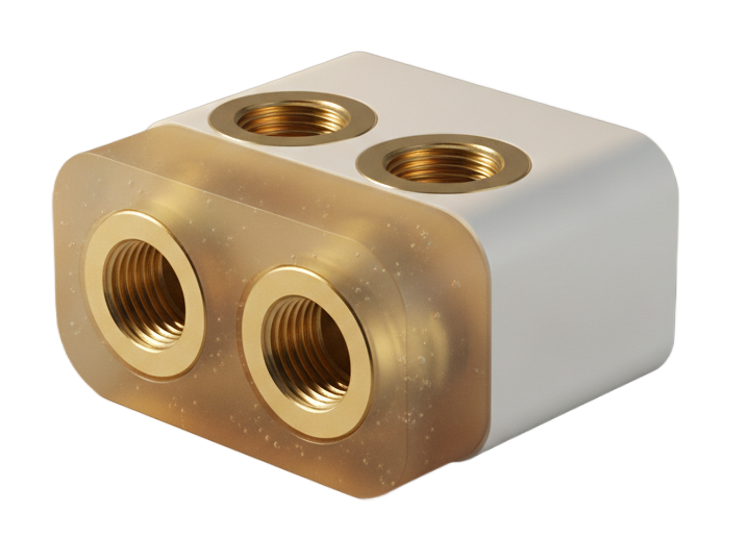
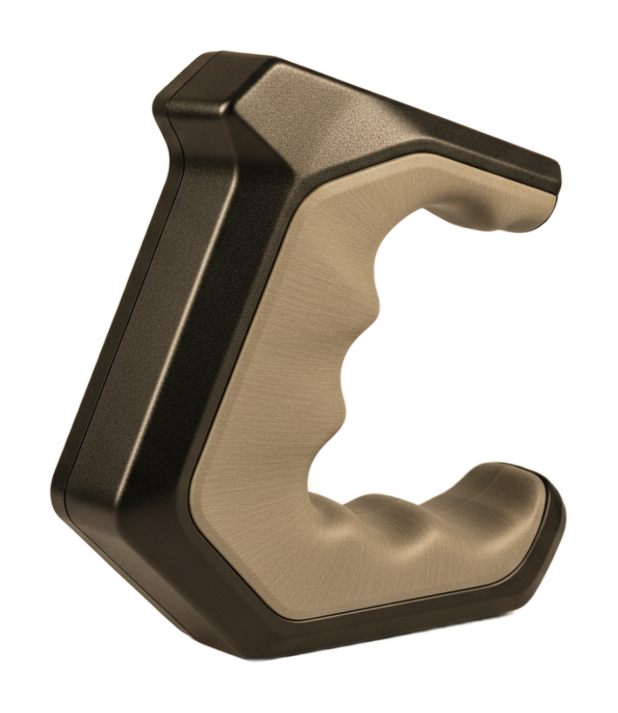
Insert Casting & Overmolding
Metal inserts, threaded hardware, and substrates can be placed in the mold before casting. Multiple resin types can be combined in a single part to simulate overmolded assemblies.
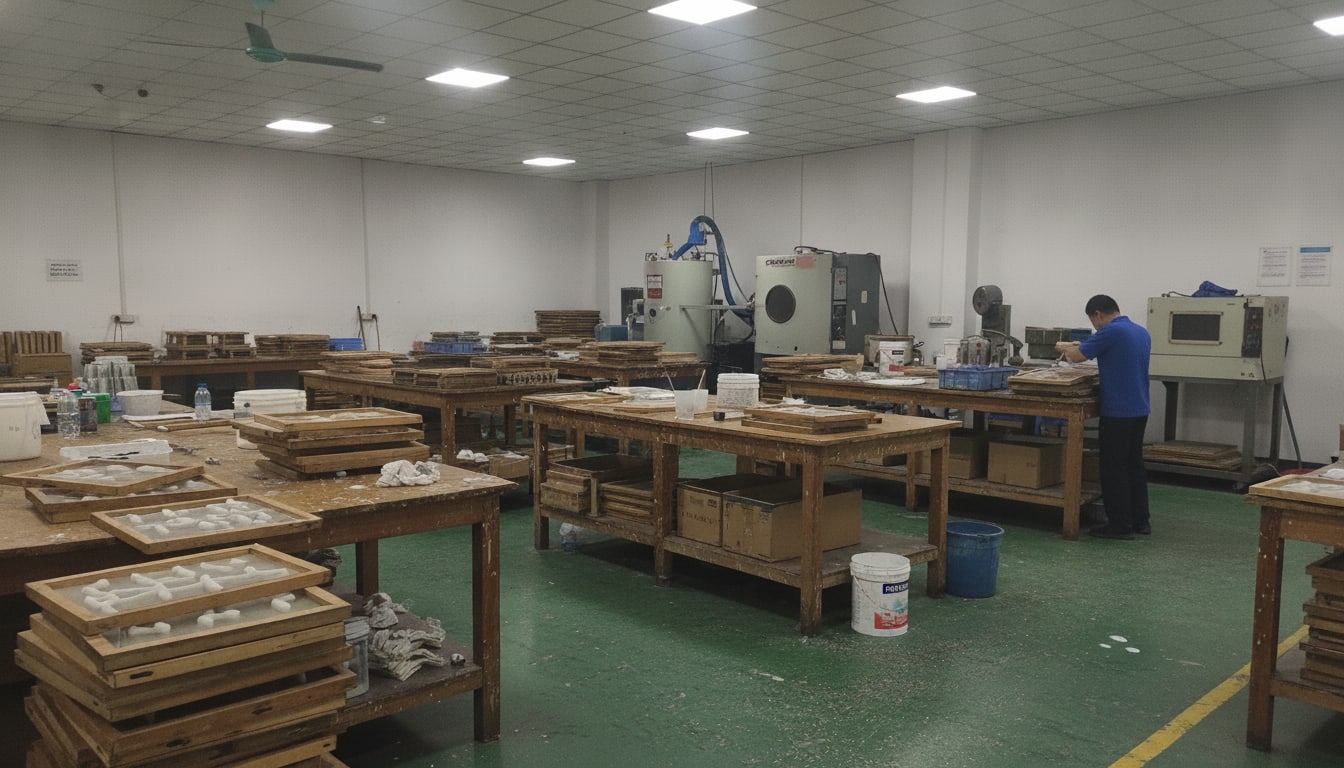
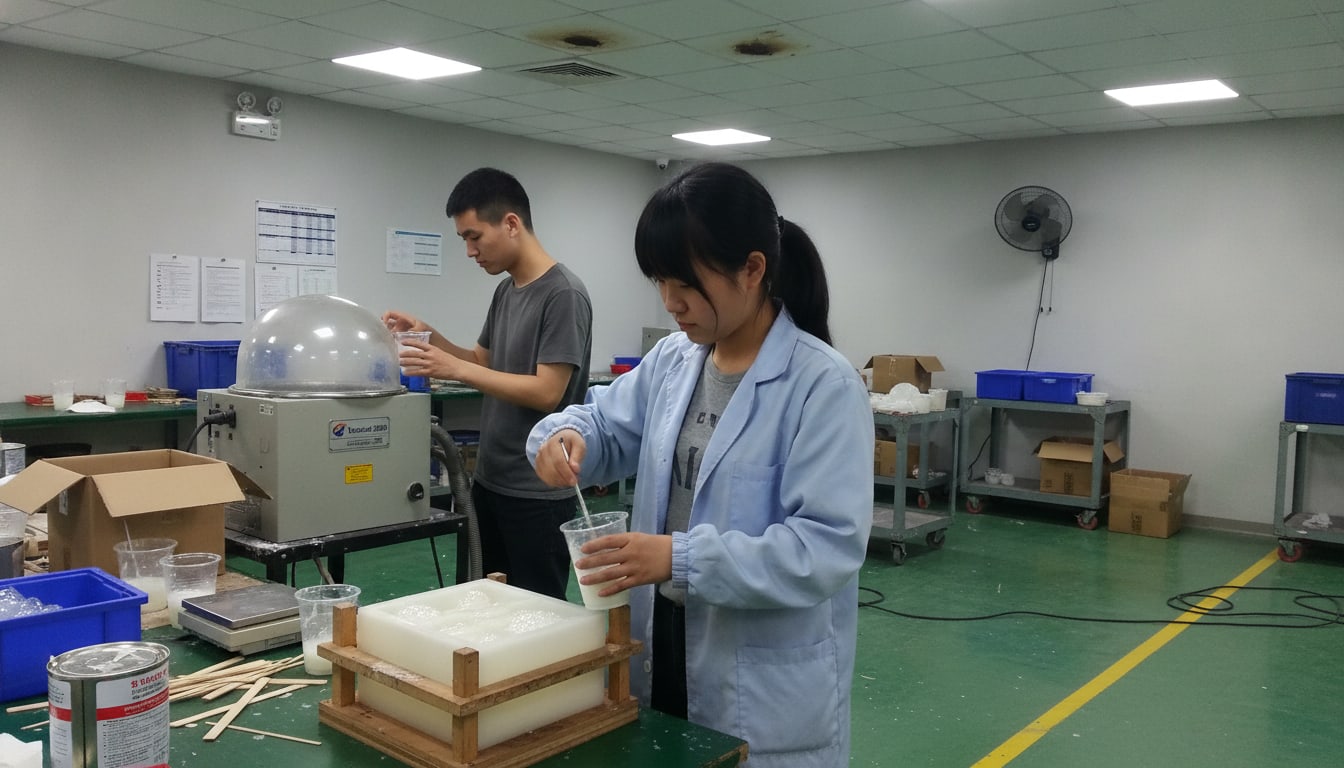
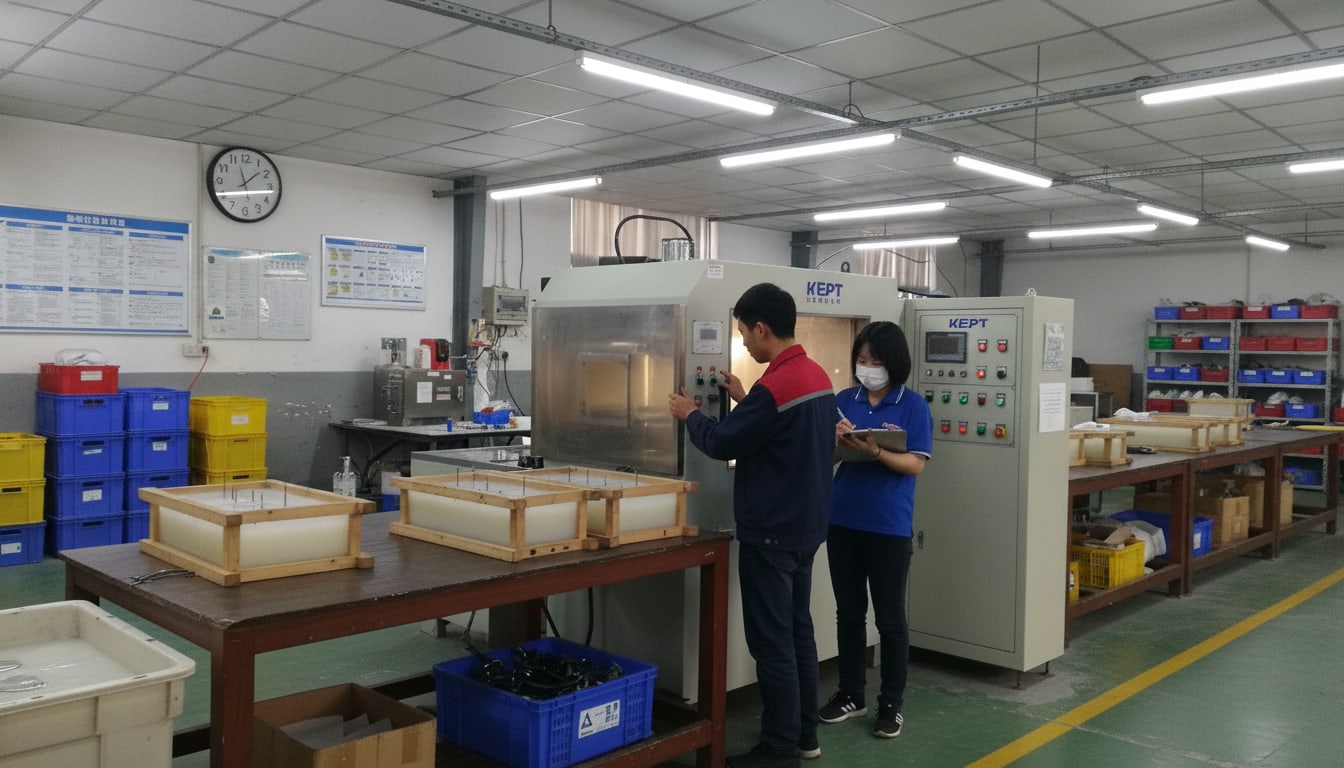
One master, then the copies
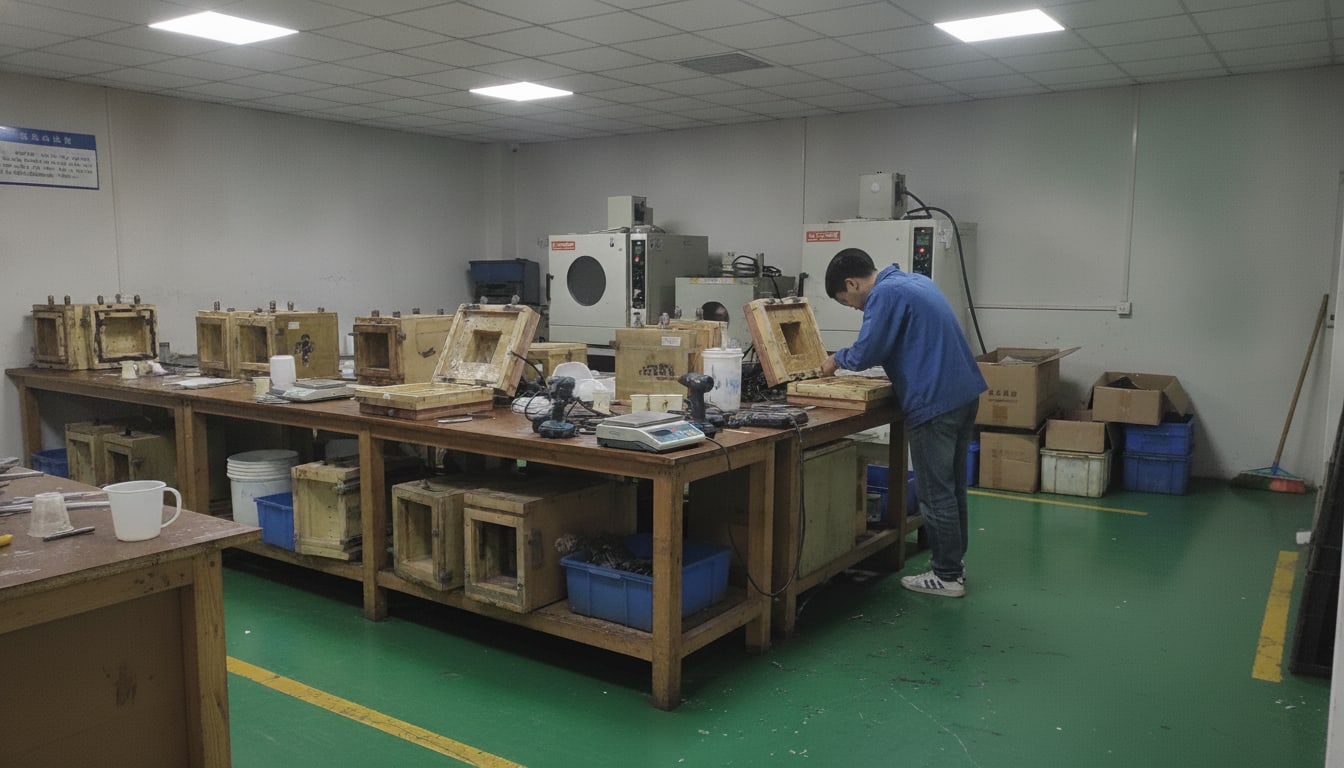
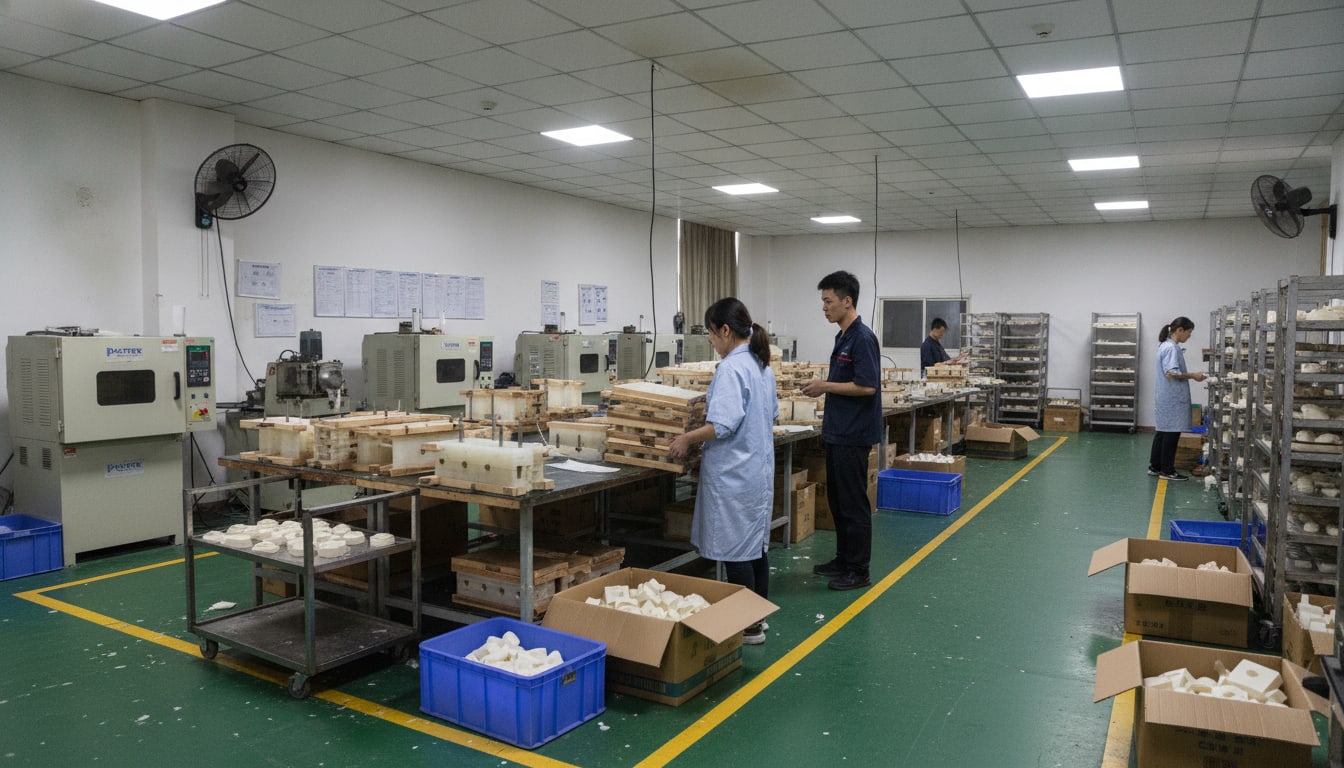
The master is CNC machined or SLA printed and finished by hand, since every copy inherits its surface. Silicone is poured around it inside a KEPT vacuum chamber and cured in an oven, then the master is cut free to leave a clean cavity. Polyurethane resin is cast into that cavity under vacuum and oven cured, up to 25 copies per mold before the silicone gives out, holding 0.3 mm (0.012 in) across more than 50 resin types.
Compatible Materials
Rigid Polyurethane
- ABS-like (Shore D78–80)
- PC-like (Clear, rigid)
- HDPE-like
- PP-like
- High-impact grades
Flexible Polyurethane
- Rubber-like Shore A20
- Rubber-like Shore A40–60
- Rubber-like Shore A80–90
- TPE-like grades
Specialty Resins
- Flame-retardant (UL94 V-0)
- ESD-safe
- High-temperature (HDT >120°C / 248°F)
- Transparent optical grade
- Polyurethane foam
Available Surface Finishes
Texture from Mold
Texture applied to the silicone mold reproduces directly on cast parts. Specify VDI or custom texture on the master.
Spray Painting
Any RAL or Pantone color. Multi-layer painting with primer, base coat, and clear coat. Suitable for marketing-grade cosmetics.
Electroplating
Conductive primer applied before nickel, chrome, or copper plating. Used for decorative chrome effects on prototypes.
Silk-Screen Printing
Logos, labels, and markings applied via screen printing post-cast.
Chrome Effect Coating
Vacuum metallization or specialty paint system replicating chrome appearance without electroplating cost.
Typical Applications
Technical Documents & Specifications
Design guides and references for this process, grounded in real manufacturing rules. More are on the way.
Vacuum Casting Design Guide
Draft angles, wall thickness, parting line placement, and texture specification guidelines for vacuum cast parts.
Materials Reference
Mechanical properties and grade selection across the resins and alloys we run.
Surface Finish Reference
Ra measurement, textures, and the platings and coatings available by material.
Metrology & Inspection
The inspection workflow, measurement equipment, inspection levels, and the documentation you receive.
Ready to source your vacuum casting parts?
Upload your files. We measure your model against per-process, per-material rules and send a DFM review before you commit to a quote.